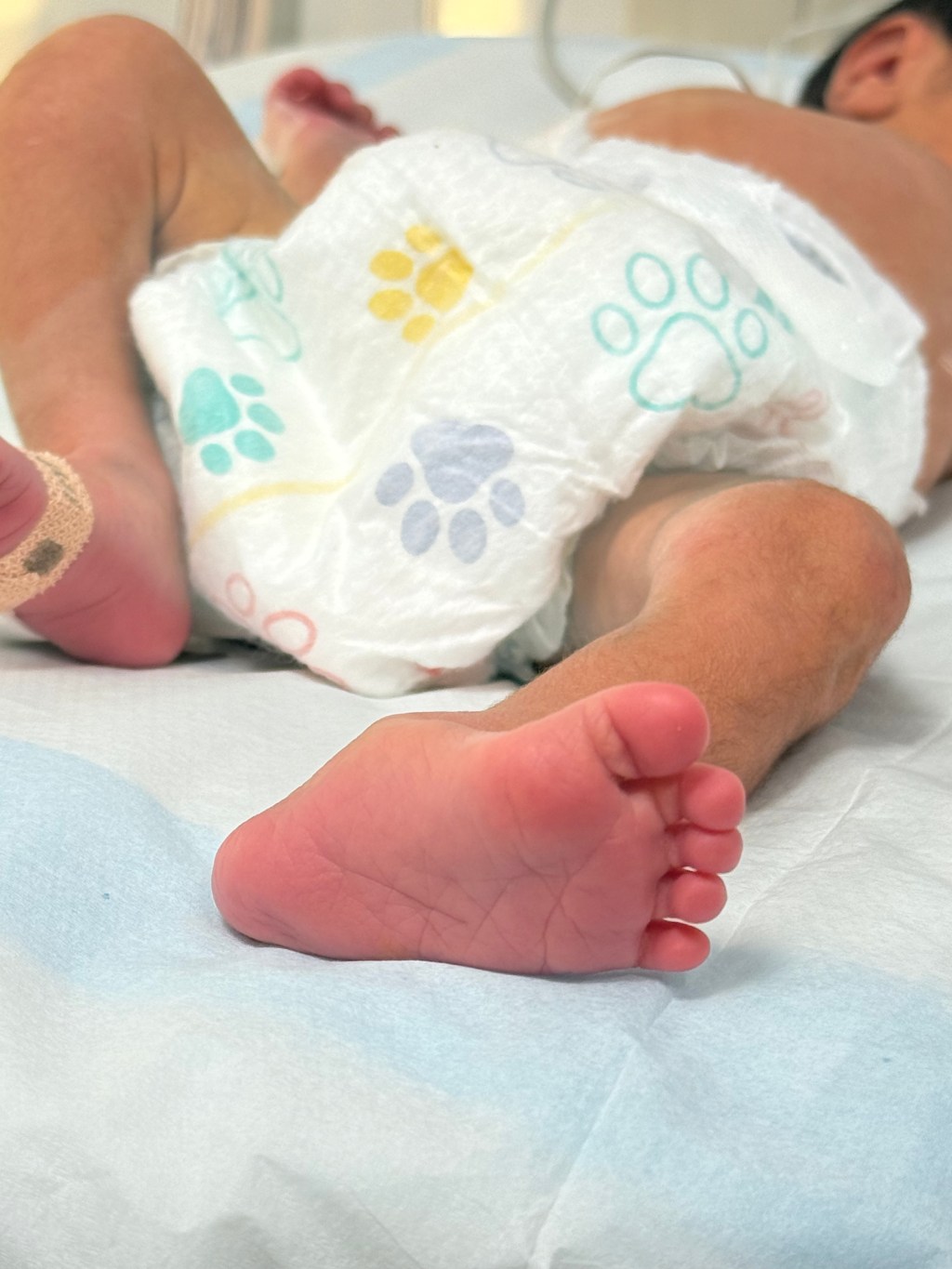
Here’s a funny story. What began as an ordinary workday ended with an unexpected addition to our family—a premature arrival who was far too eager to enter the world, completely unprepared. That unpreparedness was mine. It was birth trauma in disguise, leaking both figuratively and quite literally.
It’s amusing how every pregnant woman carries a birth plan in her mind. Epidural for a vaginal delivery, a companion by her side when things get intense, or even a planned C-section as a quicker route to avoid repeated PV exams. Birth plans are tidy and reassuring—but they’re also wildly unpredictable. That’s why they require flexibility, with acceptable alternatives ready in case things don’t go as expected.
I remember heading to work that morning, having carefully laid out my outfit the night before: an olive sweater, black scrubs (one of the few pairs that still fit me), and my fresh green bag. It was a regular clinic day. I called my consultant mid-rounds to apologize for running late, having just finished ward rounds with a heavy patient load. She laughed and said I’d likely be late anyway, courtesy of my gravid uterus and the waddling walk that had inevitably crept in by that stage of pregnancy.
A sip of my white hot chocolate, a bite of my coconut-flavored chocolate bar—and suddenly there it was: an ooze that felt suspiciously like discharge. Anyone who has been pregnant knows that by the third trimester, feeling wet down there is almost routine. Soon enough, it became clear that I had soaked the chair beneath me. Still, it didn’t feel like true leakage—not textbook, at least not to me. Or perhaps I simply didn’t want to convince myself it was. It was a busy clinic day, after all. So, I opted for an extra pad and carried on with my work (adorable, in hindsight). It wasn’t until the afternoon that I began to feel a distinct tingling sensation set in—the kind that made me pause and think, this could be labor… this could be my waters breaking. And being an OBGYN myself, working in a facility dedicated to women just like me, I decided to head to the emergency department for a quick check. If nothing else, it would quiet the growing concern in my mind.
A swab was taken, and to my surprise, it confirmed that I was indeed leaking. The PV exam followed, and just like that, labor was no longer theoretical. I remember the heaviness of that moment, how unprepared I felt. Not because I was just 36 weeks—technically preterm—but because I hadn’t been ready for it to begin that day. I hadn’t packed my hospital bag. I hadn’t gone through the baby checklist I’d carefully saved on my phone, planning to finish it later that same week. My parents were out of town, vacationing in the snow in Bursa. And the reality that I was in labor at 36 weeks meant my baby would most likely be admitted to special care for observation. I was advised to be admitted, especially since I had already planned to deliver at the very hospital where I worked, and partly to allow myself the experience of the public sector. But in that moment, I was a patient before I was a doctor, and I refused admission while so utterly unprepared. I called my husband to come and pick me up.
Unfortunately, timing was not on our side. It was 2 p.m.—the hour of clocking out, packed roads, and impatient drivers rushing home. The fuel gauge hovered dangerously close to empty. And who said I wasn’t screaming on the inside as the contractions began to intensify on the drive home? (yet tolerable)
Sigh!
It took me a full hour to pack my bags—assisted by my housekeeper and a toddler circling me with a diaper so full it practically announced itself. Amid the chaos and the smell, I somehow managed to pack what I needed without forgetting a thing. An hour later, we were back at the hospital. I remember feeling deeply grateful for my co-resident who happened to be covering the afternoon shift that day. She was incredible. She even took the time to wheel me down herself as I cried out for help, already unraveling, on our way to the labor room.
Before I could fully register what was happening, I was in bed. The labor pain escalated rapidly—violent, consuming. I jumped with every contraction. The nitrous mask clung to my face as if we were one, almost replacing the oxygen in my lungs. And then, just a few pushes later, he was there. My son. Waleed. Curled into my hands, his skin still coated in that white, creamy film of new life.
All thanks to the on-call team—and to my co-resident, who held me through it all.

 Beyond the Scrubs
Leave a comment